Yoga While Pregnant: Why It Helps and How to Begin
At first you may not even notice it, but there is a particular kind of stillness that finds you in pregnancy. A type of slowness your body insist upon even when your mind hasn’t caught up yet. Yoga at its best, meets you exactly there.
Whether you're newly pregnant and wondering what's still safe, or further along and looking for a way to feel at home in a body that seems to be rewriting itself daily, this post is for you.
Why yoga and pregnancy belong together
Pregnancy in itself is a deep somatic experience. Your nervous system is working harder than usual and there is undoubtedly a lot of physical changes happening too. Your ligaments are softening, centre of gravity is shifting and sometimes over night, it feels like your breath has changed too. Somewhere underneath all of that, you are also growing a person.
Yoga works with all of this, rather than against it.
Here's what the evidence and experience together suggest:
It keeps your body comfortable as it changes
Pregnancy brings its own catalogue of physical discomforts: lower back ache, pelvic discomfort, tight hips, swollen ankles and overall muscle tension. Disrupted sleep and pregnancy-related insomnia is often common, especially in Second and Third Trimester. Gentle yoga movement, including pelvic mobility and postural awareness, breath-led movement and relaxation practices are therefore particularly helpful. Some studies (Yekefallah et al. 2021) even suggest prenatal yoga may be associated with improved outcomes of pregnancy and childbirth such as:
shorter labour duration
reduced likelihood of certain interventions
increased pain tolerance
It prepares you for birth
Staying active during pregnancy is both beneficial for you and the baby. Yoga movements including positions like, deep squatting, all fours, hip mobility and strengthening can be really useful once labour arrives. But also breath awareness and relaxation techniques can support you well regardless of how you end up birthing your baby. Tommy's, the UK and Ireland pregnancy charity, notes that yoga can also help with stress, anxiety and depression in pregnancy (Tommy’s, 2026).
It supports your nervous system
Your breath is at the heart of a yoga practice, and it is one of the most direct routes we have to the autonomic nervous system. Slow, conscious breathing, particularly lengthening the exhale, activates the parasympathetic response, helping to bring down cortisol and create a felt sense of safety in the body. This matters in pregnancy, when anxiety, uncertainty, and physical discomfort can all keep the system running hot. A 2023 overview of systematic reviews found meaningful evidence that prenatal yoga-based practices can improve psychological symptoms and quality of life during pregnancy (Villar-Alises et al. 2023). To be familiar with your breath is not a small thing when it comes to birth. Knowing the difference between sensation and threat while under pressure can be hugely beneficial.
It offers community
Particularly in a group setting, pregnancy yoga creates a rare kind of space: one where your changing body is entirely normal, where you are not an inconvenience or an afterthought in the room. That experience of belonging matters more than it might seem. And being able to feel supported and comfortable in this environment when you might be tired or feeling overwhelmed, is really important.
It's good for your baby too
Research suggests that practices which reduce maternal stress have a positive effect on foetal wellbeing. A calmer nervous system in the mother creates a calmer environment for the baby. Might be easier said than done sometimes, but it’s a good reminder that caring for yourself is also, always, caring for your child.
What to expect from a prenatal yoga class
A well-designed prenatal or pregnancy class moves slowly and with intention. You will almost certainly spend time on the floor in supported reclined positions, on hands and knees and in gentle seated stretches. There will be breathing techniques and there may be affirmations or a short meditation at the end. You will probably leave feeling softer than when you arrived.
What you won't find (or shouldn't at least): deep twists that compress the abdomen, strong backbends, prone poses (lying on your belly), anything that overheats the body too much, or inversions unless you're very experienced and well supported.
A good teacher will always ask how far along you are, whether there are any complications or contraindications, and they'll offer alternatives when something doesn't suit. You should never feel pushed or compared. And it is always, always, ok to arrive and just rest for the hour too.
How to start
First: check in with your midwife or GP. For most healthy pregnancies, yoga is entirely safe from the first trimester onwards, but if you have any complications, your care provider should be part of this conversation.
Start where you are. If you've never done yoga before, pregnancy is actually a lovely time to begin. Prenatal classes are specifically designed for bodies in this transition, and no prior experience is needed or assumed. If you have an existing practice, it's likely time to adapt it, letting go of any ambition about where your body "should" be.
Listen more than you perform. This may be the most important thing. Pregnancy has a way of stripping back our relationship to our bodies and asking us to pay a different quality of attention. Yoga is a good place to practise that.
A note on the first trimester
Many people feel cautious about exercising in the first trimester, particularly given fatigue and the uncertainty of early pregnancy. This is understandable. Gentle movement is generally considered safe, but it's also perfectly fine to rest. If you're exhausted, rest is the practice. The yoga will be there when you're ready.
Most prenatal yoga classes will advise you to wait until 12+ weeks. First trimester is not a time to start something new. Let the body get used to being pregnant for a little while and give yourself plenty of rest before you start. The benefits will be the same, and it’s never too late to start.
The Bigger Picture
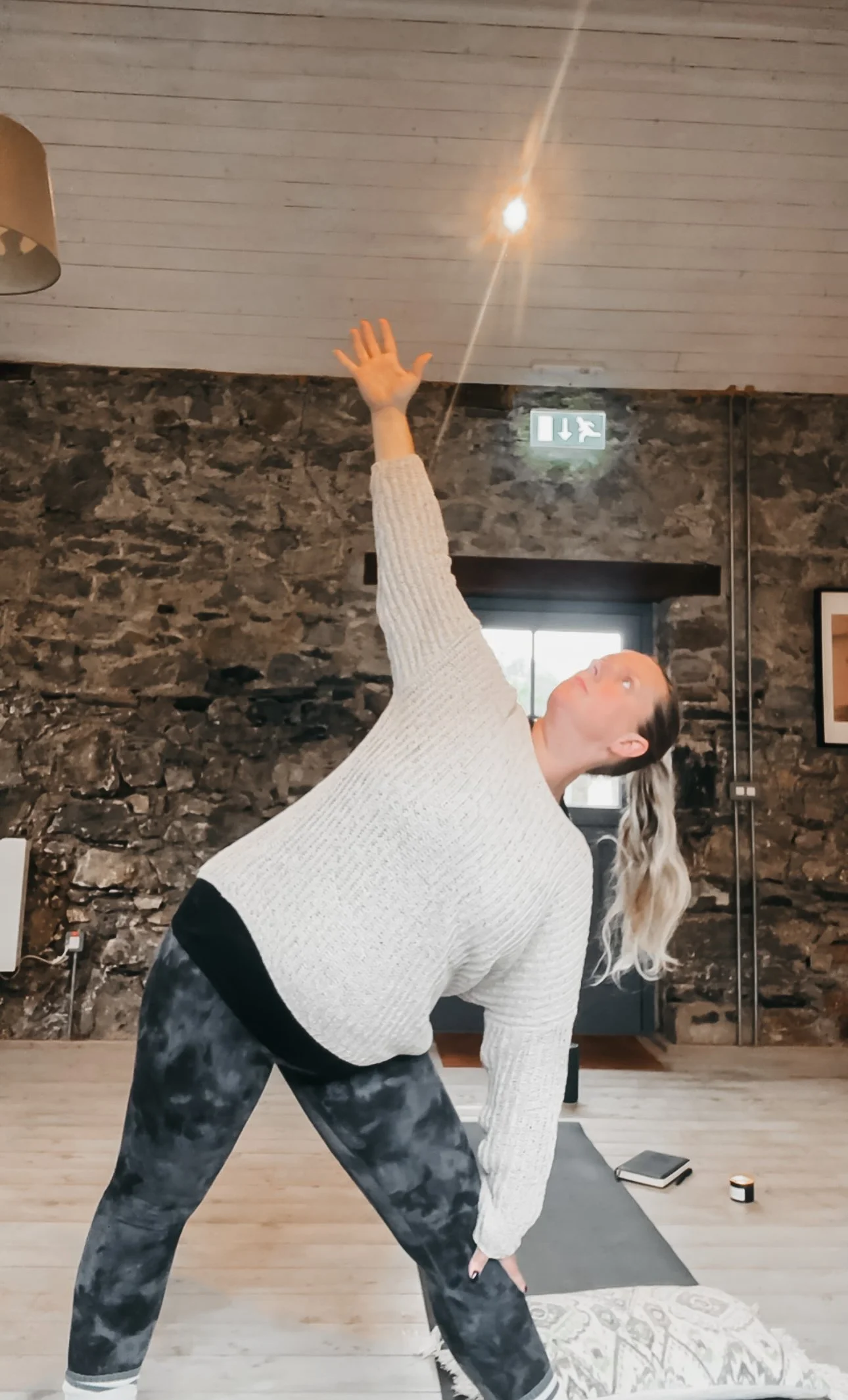
Yoga during pregnancy isn't about achieving a beautiful shape or staying "in shape." It's about maintaining a relationship with your body during one of the most significant transitions of your life.
It’s about finding your breath when things feel uncertain, and learning, slowly and practically, how to be present with intensity without being overwhelmed by it.
This is all useful preparation for birth. But it's also useful preparation for motherhood, which has a tendency to ask for exactly the same things.
References
Tommy’s, The pregnancy and baby charity. (2026). Yoga in pregnancy. https://www.tommys.org/pregnancy-information/im-pregnant/exercise-in-pregnancy/yoga-pregnancy
Villar-Alises et al. (2023). Prenatal Yoga-Based Interventions May Improve Mental Health during Pregnancy: An Overview of Systematic Reviews with Meta-Analysis. MDPI. https://doi.org/10.3390/ijerph20021556
Yekefallah et al. (2021). The effect of yoga on the delivery and neonatal outcomes in nulliparous pregnant women in Iran: A clinical trial study. BMC Pregnancy and Childbirth, 21(1), 351. https://doi.org/10.1186/s12884-021-03794-6